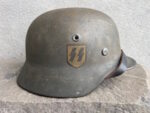
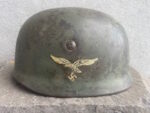
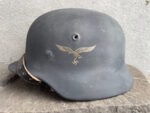
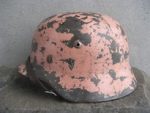
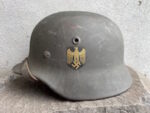
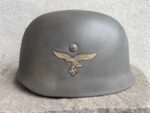
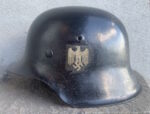
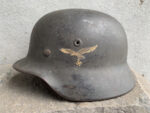
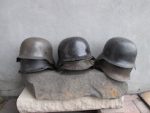
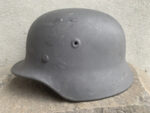
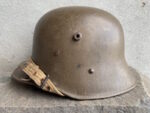
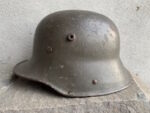
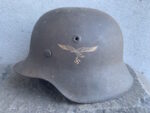
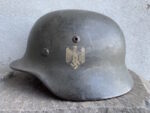
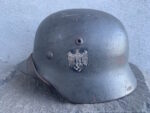
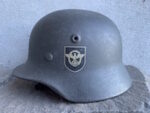
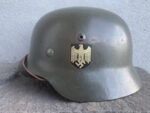
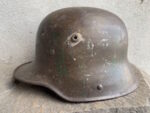
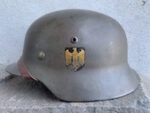
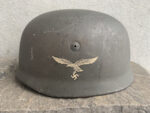
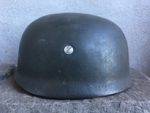
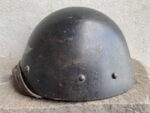
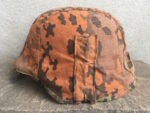
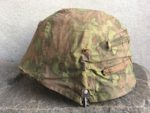
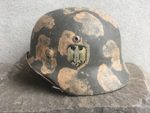
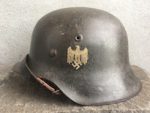
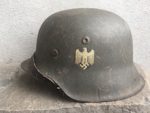
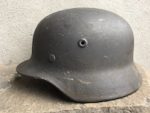
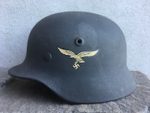
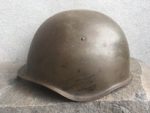
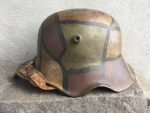
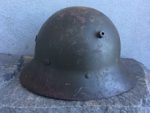
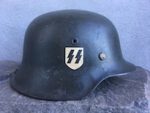
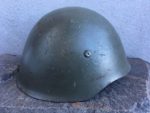
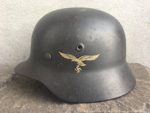
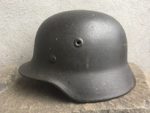
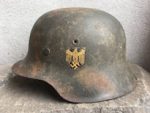
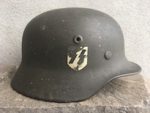
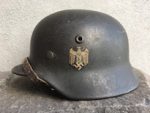
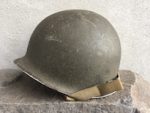
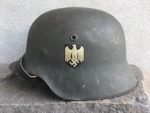
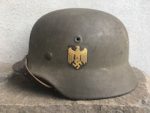
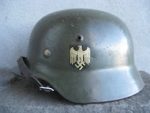
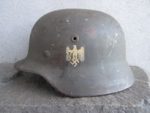
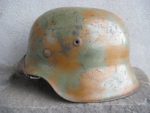
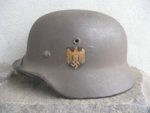
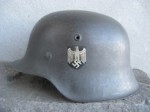
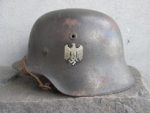
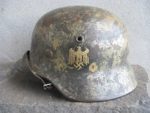
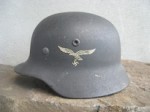
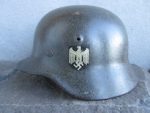
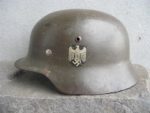
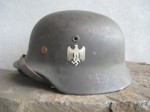
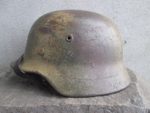
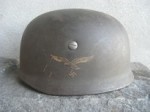
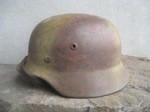
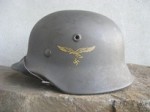
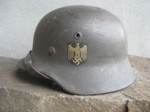
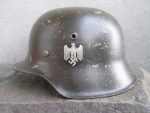
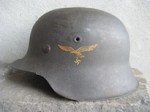
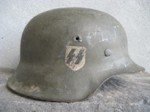
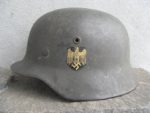
ORIGINAL HELMETS FOR SALE


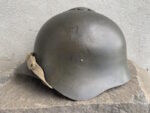
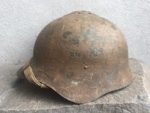
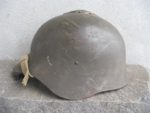
RARE RUSSIAN HAKINGOLKA WW2 SSCH-36 HELMET


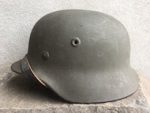
Soviet Ssch-36 steel helmet, early type!  Over ten years of collecting this is my very first one as they just don’t seem to come up all that often and when they do are generally being sold somewhere in Europe and rarely here in North America.  I should also note that most of these saw action fighting the Japanese in Manchuria or against the Finland Army whereby Russian soldiers would remove the liners so that they could wear the metal shell over top a Russian flap style fur hat. So the ones you see almost never have original canvass liners still inside of them and are often only rusty shells.
This early war Hakingolka has everything going for it with a complete all original canvass liner and seldom seen original leather chinstrap which predates the beige cloth style chinstraps you see on most Russian helmets.  I had done a lot of research on this helmet and believe it to be a field re-issued version whereby the original slightly ligher green paint was painted over by brush stroke a somwhat darker green as you can still see spot of lighter green where the darker brushed on green has flaked away. Typically you will find the factory green paint to be one shade lighter and the red star in the front will be larger and follow a stencilled pattern.  The red star on re-issued helmets were more simple, fatter looking and less standardized at this time being brushed on by hand without a sickle or hammer which is exactly how this was originally done. The red star has been lead paint tested and I gaurantee it to be original and wartime applied.  There is also a very sloppy shellac job done to seal in the red star which you can see from the up close photos below whereby a broad brush stroke was applied over the star missing one of the red tips as if done in a rush or in less than ideal conditions. The branch number is stamped at the rear of the shell and is hard to make out but is all there.   There are a few white paint marks on the left side of the helmet which can most likely be removed with a little bit of acetone but in my opinion is best left alone as it adds a bit of character. Approx. 90% of it’s original dark green paint over paint and the Soviet red star nearly 95% in tact! Extremely hard to find in the condition like that. It’s your last chance to complete your collection with real unique SSCH-36 early helmet!

$995.00

BACKGROUND HISTORY – WIKIPEDIA 
(The SSCH-36 was designed by Aleksandr A. Shvartz, and began production in 1936. Its large front rim and wide flares over the ears provided good protection for the wearer. The German M35, introduced a year before the Russian M-36, served as a model for the development of the M-36. The M-36 was also fitted with a comb on top, which allowed for ventilation. There were also apocryphal claims that the comb was designed to deflect saber blows.  Early M-36s were made with fragile leather linings. Due to the unreliability of these early models containing leather linings, later variations were introduced with cloth linings. Similar problems were also encountered with early leather chinstraps, so the leather chinstraps were phased out in favor of cloth models as well. Throughout their production four sizes were produced: small, medium, large, and extra large. The M-36 was worn by Soviet soldiers in several campaigns of the late 1930s and 1940s, including the Khalkin Gol campaign against the Japanese in 1938 (giving it the nickname “Khalkingolka”),[1] the Finnish Winter War of 1939-1940, the 1939 invasion of Poland, the 1940 invasions of the Baltic states and Bessarabia, and in World War II, or as it is known in Russia, the Great Patriotic War. It was also distributed to the Republican soldiers of the Spanish Civil War in conjunction with Soviet support of the Spanish government. During the Finnish Winter War, the cold temperatures forced many soldiers to tear out the helmet’s liner so the ushanka, or fur hat, would fit under the metal shell. Production of the M-36 ended in 1941. Today it is a rare and expensive item for its collectors.)

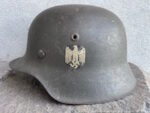
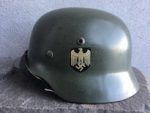
M35 ET64 ND HEER ARMY HELMET COMPLETE & IN NEAR MINT CONDITION

Descriptions coming soon….

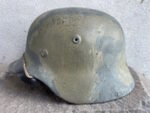
M42 CKL 64 HEER NORMANDY FIELD CAMO SPRAY HELMET

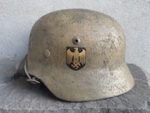
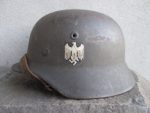
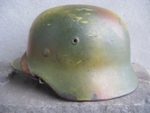
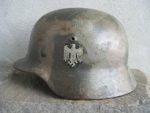
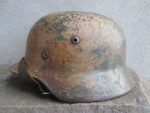
Here is your classic late war M42 Normandy camo helmet with no visible decal underneath the paint so I only  have the inside color to go on and from that it appears to be a faded grayish green with  so I am thinking Heer but it is rather faded and dark so a little hard to be certain.  The inner liner is late war pigskin as it has those hatched dimples like an old football indicative of swine and is very nice and dusty.  Unfortunately the outer zinc liner band is a little tight to the shell and so I really can’t make out any manufacturing marks or dates on the band but it must be post 1942.  When I pull back the inner springs to check to see if the split pins have been re-bent I actually got a little puff of dust rise up so I would definitely conclude the liner to be original to the shell.  All 3 split pins are relatively tight up against the shell and the back prongs have only been bent once with all rivets still in tact.  The paint scheme is typical of Normandy whereby a base layer of dark yellow or yellowy tan is laid down and then by way of pneumatic spray gun probably from a German mechanized unit additional colors were added in this case a dark retro green and reddish brown paint over top of the base coat.  Overall the paint has a nice darkened patina to it with very little rust and no pitting or dents I can discernibly see.  Some of my customers have asked why always the same dark yellow or sandy tan color base coat on most Normandy helmets?  Obviously not all Normandy schemes have this same configuration however many of them do which makes me believe that the tan base coat under Western European conditions in the summer of 1944 would be the best color to camouflage the average German solider who would have found himself mainly in open fields full of tall dead grass.  So any color close to wheat or to dead grass would have made for the ideal base coat.  Sometimes you’ll find Normandy camo helmets with the tan base coat actually painted on the inside as well right up to the outer liner band.  Why would they do this many ask?  The same if often see on DAK and winter camos why would they bother to paint the inside as well?  Well in my humble opinion we must always consider that especially from 1943 onwards that the average German soldier was under constant threat of aerial attack and so must have feared being see from the air by reconnaissance planes.  If you consider that half of the time the average German solider was not marching or fighting but rather bathing, shaving, cleaning weapons or resting so any helmets that would have been turned upside down on the ground would still be camouflaged from the air.  So it was a fool proof way to make sure a soldier’s helmet never gave him away to the enemy.  This is of course only my own personal speculation on the matter.

$1750.00 ON HOLD

M42 ET66 GREEN CAMO PAINTED W/T SAWDUST


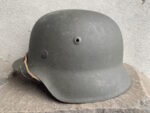
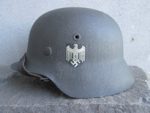
Well this is simply one of my favorite helmets based merely on it’s simplicity and rich camo green hue. This is a late war M42 ET66 camo painted helmet in a beautiful rustic dark green.  The inside color is very dark so it’s is difficult to make out whether or not this is a Luftwaffe or Heer issued helmet however upon closer inspection in direct sunlight I do see the color as more of  dark green as opposed to a dark navy blue so it would be safe to conclude this to be an Heer army helmet.  On the rear skirt edge is a small ding but doesn’t do anything to detract from it’s overall appearance.  The paint is brush painted on as you can still make out strong brush stroke lines within the paint so definitely a helmet repainted under combat conditions while still in the field.  The original sheepskin liner is a bit dry and thin but still fully in tact which is definitely a plus with a nice size stamping of 59 on one of the tongues.  Just needs an original chinstrap to be fully completed but what a great pieces of WW2 history.  I added the last photo to show you how green it really looks in hand as the other photos make the helmet appear more grayish green when it fact it is more of a dark grassy green as is more evident in the last photo.

$750

Rare Bucket Sized M35 SE68 SD Luftwaffe Helmet

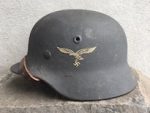
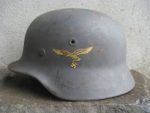
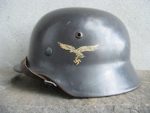
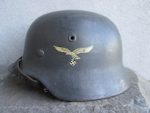
This interesting helmet has a Luftwaffe blue/grey finish that remains a solid 95% intact. There are some minor blemishes in the finish, with a few small scratches. The darkly toned Luftwaffe 2nd pattern Adler decal looks great and remains a solid 99% intact. The interior displays some minor wear from use. The liner is produced in brown leather and is size stamped 61. There is moderate scuffing to the lower edge. It has a drawstring and an early aluminum square bale liner that is nice and tight. The side of the shell is stamped SE68. The rear of the skirt is stamped with the steel lot number of 4918. There is a well-worn but solid brown leather chinstrap with aluminum fittings as well. The chinstrap is the typical brown leather finish with an early war aluminum buckle and maker’s marked Franz Brehme Walsrode 1938 a common leather manufacturer for the Luftwaffe during this time period. An above average example tough to upgrade!
$1195


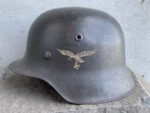
Mint Condition M40 Q66 Luftwaffe SD Helmet

Folks they just don’t come nicer than this one. When I first bought this little gem I was worried as the decal and paint just looked too good to be all original and I fear that the decal might be post war applied. However, when I opened up the box to do a hands on inspection I was over the moon to realize it was in fact the real deal both the paint and decal are spot on all original. The liner has that great buttery smooth look and feel to it matching the near pristine condition of the rest of the shell. This the desirable large sized Quist manufactured Q66 and really a tough one to upgrade, just needs an original chinstrap to complete it. It is one of my favorite finds of 2010 so hopefully the right buyer will come along to enjoy it as much as I have.
$1095.00


M40 Q66 Luftwaffe SD Helmet Near 100% Decal

This interesting helmet has the typical Luftwaffe blue/grey textured finish and remains an impressive 95% intact. There are some minor blemishes in the finish, with a few small scratches but nothing that hurts the overall eye appeal. The tea toned Luftwaffe 2nd pattern Adler decal looks great and remains a solid 99% intact with some light spider vein crazing in the original lacquer which just gives the decal a bit more character in my opinion. The inside of the shell is stamped Q66 by the Quist factory in Esslingen. The rear of the skirt is stamped with the steel lot number of T1482. According to the lot number data that exists for original helmets I’ve discovered that the “T” lot numbers were some of the last M40′s shells produced during the war just before the M42 came into production. So given this particular “T” lot number you can safely assume the helmet was forged right at the end of 1941 or at the beginning of 1942.  The liner is beautifully aged with a nice buttery tone and feel to it.
Interestingly enough the drawstring was replaced by a wartime shoe lace which appears to be completely original with lots of great age to it.

$995.00

As most of you fellow collectors already know the M40 Quist was the most preferred model by German front line soldiers as the steel gauge was slightly thicker and the overall weight is about 4.2 lbs as opposed to the normal 4.0 lb giving
more protection to the user. The stamped vent holes in the M40 Quist are also somewhat larger in diameter than other factories which seems inconsequential at first glance however since these holes were meant to dissipate heat this particular design must have been a bit cooler and more comfortable to wear as well.

Today I received an informative email from a fellow collector which sheds some light on the history of M40 production.

“I agree on the fact the helmet is probably pre-1942, but for a different reason than your explanation; it seems Quist produced only a very limited amount of M42, and that they produced the M40 until 1945 (and beyond with the German border guard helmet and M55 Finish helmet). The main difference is that the Q6x stamping was moved in the neck above the batch number around 1942-43). Personally, I must admit I never saw a Quist M42.”

Thanks.
Best regards.
JS Mus


Immaculate M40 Q60 SD Luftwaffe Helmet

This is by far the one of the nicest LW SD helmets I have ever seen before as the paint is 99%+ in tact and the decal even nicer at an incredible near 100% perfect!!! The size marked Q60 DN127 makes this a no brainer that this helmet was issued for service by the Hitler Youth as not men or even older teenager could fit this on their heads. The lot number DN127 proves that this helmet was manufactured in 1941 by the Quist firm in Esslinger. The young boy who would have worn this probably didn’t see much action or never even wore it at all as there is almost no wear on it and the decal is in remarkable near perfect condition.
$1095.00


M40 ET64 SD LUFTWAFFE HELMET MINT LINER


This mid war Luftwaffe M40 single decal helmet is just about as good as it gets.  Original textured blue grey paint is nearly all there with a beautiful Luftwaffe 2nd pattern decal in a rich tea tone patina is nearly all there.  The liner is stamped 56 and has a beautiful creamy tan beige with some faint concentric black circle outlines indicative of when the solider would rest his helmet on top of his dark gray gas canister while in barracks or in the field leaving these circle marks.  If you are like me and appreciate mint all original liners than this one is definitely tough to beat.  I realize that Luftwaffe helmets don’t command the same value as Heer however they do seem to be on rise in recent years so definitely more collectors seem to be appreciating them.
$900.00

M42 ET66 Luftwaffe Single Decal Helmet

You really have to see this one to believe it! If your preference is choice and mint decals, then look no further than this gem. The Luftwaffe blue/grey, rough texture finish is about 85% intact. There are a few scuffs and blemishes, but the finish is fully intact. The Adler decal is even nicer with just a few small nicks and remains 98% intact. The interior is a little more rough so you know this helmet was really used during the war on a daily basis.

It is size stamped 58 with it’s original drawstring and a non-reinforced zinc liner band that is maker marked, dated 1943. The inside ET 66 and lot number 3016. A real combat worn helmet with an excellent decal with that been there done that look.  This is really a $800 helmet if only the liner were in a bit better shape so definitely a bargain to be had here.
$450.00 SOLD  02/01/12


M35 NS66 LW DD EARLY WAR HELMET

This M35 NS66 helmet was formerly a Luftwaffe DD but as per 1940 regulations had the tri-color shield neatly removed by the original soldier.  The 2nd pattern Luftwaffe eagle decal has a beautiful golden tea tone caused by the natural aging process of the original lacquer sealer.  What’s great about this helmet is that it shows all the signs of actually being used and worn during WW2 and definitely not by a soldier pushing pencils behind a desk.  The inside liner has a rich dark age to it and is in slightly better condition than the outside shell in my opinion so if you are into near mint and complete liner systems at a reasonable price this helmet could be for you.  The residual chinstrap remains in place mainly for it’s historical value.  This helmet is definitely one of your typical battlefield pick ups in 1945 no major bells or whistles just some honest wear from war time use.

$595.00

Early Model M35 EF64 Luftwaffe DD Helmet

A wonderful example of an early war smooth finish double decal Luftwaffe Helmet.  The 2nd pattern Adler Luftwaffe eagle is in great condition at almost 95% complete with a full in tact tri-color national shield decal 80% in tact.  Most of these early helmets were painted over and reissued in a texture finish so it’s nice to find such a pristine and untouched early example.  Shell is size EF64 which was average for the time period and comes with a buttery smooth near perfect all original square bale aluminum bale liner and matching drawstring.  The chinstrap is the typical brown leather finish with an early war aluminum buckle and maker’s marked Franz Brehme Walsrode 1938 a common leather manufacturer for the Luftwaffe during this time period.  A very nice example of a well kept M35 LW DD with no modifications or changes whatsoever despite 70 years of history.

SOLD $1550.00


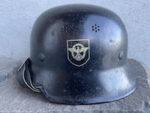
M35 NS64 DD SS-POLIZEI COMBAT HELMET


This helmet serves as a wonderful example on how the Wehrmacht never wasted anything always re-using and recycling as dictated by the demands of the war .  This is a super rare M35 SS-Polizei helmet in early war semi-gloss pea green originally leaving the factory as a DD Heer.  Later for whatever reason the helmet was re-issued with SS-Polizei decals with the unbordered police service decal and swastika party shield decal interestingly enough both applied directly over top the original Heer army decals. The chinstrap is dated 1938 and the liner as it should be is early war aluminum with square bales and original drawstring and I must say in remarkably mint condition as you can clearly see from the photos.

A fantastic helmet and piece of WW2 history!!!

1550.00

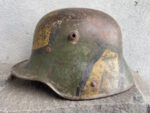
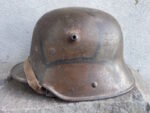
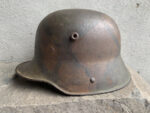
WWII GERMAN M16 GBN 64 LATE WAR VOLKSTRUMM HELMET PERIOD PAINTED

DESCRIPTION
You are bidding on a 100% genuine M16 German late war army helmet used by the Volkssturm Army during the later stages of the war.  I know this to be Volkssturm because I have the exact same helmet with a late war pigskin liner painted in the exact same flat black and Heer decal.  The black paint between this one and the one in my collection are a dead on match as well as the distinctive natural wear pattern which is all but impossible to fake.  The black paint on this helmet is brush stroke applied and very thinly applied and not to be confused with 60′s black enamel painted biker helmets or by some guy who decided to paint this in his garage.  I 100% guarantee the black paint to be period applied for service in a local Volkssturm Unit as the M35,40 and 42′s were in short supply during the end of the war and WW1 veterans were encouraged to bring their old equipment and re-use it for front line combat during the hopeless final days of the war.

One interesting feature is that you can still make out the original pea green paint beneath the surface as well as shades of ocre and dark yellow WW1 applied camo paint just lurking beneath the surface.  The inside stamped is marked GBN64 which puts this helmet as a size medium.  If you have an original leather liner this would be a great restoration project.

BACKGROUND HISTORY – (“I encourage you to read this….”)
The Volkssturm (“storm of the people”; “People’s Army” or “National Militia”) was a German national militia of the last months of World War II. It was set up, not by the traditional German Army (Wehrmacht) but by the Nazi Party on the orders of Adolf Hitler on October 18, 1944 and conscripted males between the ages of 16 to 60 years who were not already serving in some military unit as part of a German Home Guard.

Typically, members of the Volkssturm received only very basic military training. It included a brief indoctrination and training on the use of basic weapons such as the Karabiner 98k rifle and Panzerfaust. Because of continuous fighting and weapons shortages, weapon training was often minimal. There was also a lack of instructors, meaning that weapons training was sometimes done by World War I-veterans drafted into service themselves. Often Volkssturm members had to familiarize themselves with their weapons when in actual combat.

There was no standardization of any kind and units were issued only what equipment was available. This was true of every form of equipment.  Volkssturm members were required to bring their own uniforms and culinary equipment etc. This resulted in the units looking very ragged and, instead of boosting civilian morale, it often reminded people of Germany’s desperate state.
$250 SOLD

M40 Q66 LUFTWAFFE WW2 NORMANDY CAMO HELMET – POST WAR CLEANED


This is one of those more interesting camo schemes as I have always found the pneumatic spray gun applied Normandy camo patterns to be far more impressive than the more crude hand brushed applied patterns. In this case from looking at the dark midnight blue interior paint I would guess this to be a mid-war Luftwaffe camouflaged helmet as opposed to an Heer. The camo paint colors are a little more clearly discernible at the rear skirt which is typical as this area would have received the least amount of wear and are clearly a brick red brown, dark green over top a primary base coat of dark tan yellow. Such a pattern would make sense when you consider the terrain and use of ambush tactics the Germans were forced to employ due to overwhelming odds in both men and materials they faced once the D-day invasion was in full swing.

On the LW eagle side you can barely make out a partial wing on left hand side of where the original decal would have gone.  It appears that someone either during the war or post war decided to scrape off the decals on both sides as you can see a faint outline of where the decals once were.  Strangely enough you can see the faint outline of the national tri-color shield on the right hand side despite this being an M40 shell there was still a transitional period in 1940 where both decals would have been applied.  The shell is faintly marked Q66 T157 marked at the back of the skirt suggesting a later war manufacturing date between 1943-45 as Quist made the M40 shell right up until the end of the war while the other factories switched over to the M42 design.

Another interesting feature is that there are several name or unit markings on the leather some more visible than others so I am not sure if the faint ones would be the original German soldier’s and the darker ones perhaps the US-vet who took it off the battlefield. I bought this from a vet’s estate sale out of Buffalo, NY and so it’s too late to ask the original owner any further questions about it but I think if you focus on the font style of the writings you can make out if there are US English verses Gothic style German.

I left the original estate auction sale tag right on it and have left if completely untouched from moment I picked it up. I know this came from an actual vet because I spoke with the woman at the auction house who filled out the consignment forms and she verified it came out of a local veteran’s estate.

The inside liner has a beautifully darkened patina which occurs naturally as a chemical reaction between the tannins used in leather tanning process react with oxygen over time. The liner band is also very interesting as it is a great example of the transition period that occurred in 1940 going from square bale aluminum reinforced liner bands to zinc and steel ones.  As you can see interestingly enough the rounded bales are still made with early war aluminum while the liner band itself is the mid war steel construction. Just another example at how mid war Germany reused and recycled everything they had into their war effort.

I have recently contacted a few Normandy camo experts some of whom have even written books on the subject and they have suggested that the outside paint appears to have been sanded down by some type of liquid abrasive and then waxed to create that dull film you see in some of the photos.  I respect those who feel this type of post war cleaning ruins the value of a true all original Normandy camo helmet however what is left is still original in my view and still a rather unique and historical find.

I have subsequently lowered the price quite dramatically and am actually in a loss position so here’s your chance to pick up a real bargain.

$500 SOLD (What a bargain!!!)

Rare M35 Luftwaffe EF66 Field Brushed Camo Helmet

This helmet came in out of the woodwork just last week from an estate sale in New Hampshire and definitely has that been there done that look collectors like myself love to see. The outside top dome is a very dark midnight blue followed lower down by two distinctive thick brush stroke lines in forest green and a reddish brown color.  The color appears almost sprayed on but when you view it from the back the lines are a little more clear and you can definitely make out that these are rough paint brush strokes and because they are not standard would have been field applied.  The overall texture is quite rough and has a cement like finish while the inside shell is a smooth blue grey and a lighter shade of blue than the top outside dome suggesting all original Luftwaffe M35 paint on the inside.  The EF stamping indicates the shell was manufactured by Emaillierwerke A.G. in the city of Fulda.  All three inside split pins have their original rivets still in place with a fair amount of surface corrosion and all appear to have been only bent over once suggesting that this earlier liner inside an early M35 shell has never been removed.  Around the inside metal band there are a few kink marks as if someone was using a screwdriver trying to pry open a space to get a glimpse at the manufacturer’s stampings. All I can say is that since the aluminum liner band is non-reinforced that it must be an earlier model probably from 1935-1937 but no later.  The leather liner has somewhat darkened with age and I know from past experience that a lot of M35 original leather liners do end up turning a chestnut brown over time mainly due to acidity in the tanning process of the leather.  The long end of the chinstrap is still present but it has been cut and has lots of cracks in it but better to be partially there than not at all in my opinion.  A very nice lid with lots of character in a very simple yet most likely effective field camo applied pattern.

$950.00

M35 NS68 SD FIELD APPLIED BRUSH STROKE HEER HELMET

Here is a beautiful example of a super large bucket sized NS68 field re-issued helmet with a stunningly beautiful Huber Jordan late war decal.  Originally this helmet would have left the factory as a double decal Heer helmet but later most likely due to paint damage or from the need for better camouflage in the field was taken back into the depot and given a fresh coat of highly textured paint very thick and chunky as to better conceal the solider from any chance of sunlight reflectivity.  The original liner was kept as it was still in usable condition at the time as was the original steel buckle chinstrap painted in sage green but unfortunately is now mostly gone.  During this process as was commonly done the size number was painted in white paint in block letters the numbers 60-61 to make it easier to sort each finished shell based on size.

To give the proper narrative what appears to have happened is that most like sometime during 1940-42 this formerly semi-gloss pea green DD Heer was sent back to a field depot to be stripped down and repainted to serve as a more practical combat helmet.  During the process the paint was stripped down most likely down to the base metal as there should be some lacquer cracking beneath the paint where the tri-color shield would be however there is no evidence of this leading me to believe that everything both the paint and decals was stripped down.  Then a small piece of cut our paper or even masking tape which was widely available at the time was used to cover a part of the helmet so that none of the brushed on textured paint would cover it over.  Once the paint had dried the solider or depot worker simply applied a late war Huber Jordan decal to it which were widely available at the time as a suitable factory decal replacement both in the field by the common German solider or by workers at the depot level.  The decal is in near perfect condition with a nice tea tone lacquered patina.  I theorize that since the decal is actually counter sunk in relation to the height of the rest of the paint that this would have provided it a degree of special protection from the normal amount of dings and scratches suffered by the rest of the paint.

A real looker in any event especially if you like collecting the larger sizes.

$1050.00


M40 SD SE64 Heer Helmet & Chinstrap Nicely Toned Decal

I


This is your classic every collector must have mid war M40 single decal Heer army helmet with all original liner and chinstrap.  Every new collection needs one of these as an anchor helmet to the rest of  the ones already being displayed on your shelves.  What’s great about this helmet is the condition of the typical SE eagle decal which rates at around 98% with a gorgeous deep rich tea toned hue indicative of SE factory applied decals on M40 shells.  The liner is late war pigskin and a bit stiff but very thick and resistant to future wear like an old tough leather football.

The outside paint is textured and factory applied and nearly 90% coverage with no pitting or any dents.  One neat feature is that the original solider hand painted his name inside the back skirt in green paint which reads “Frischkorn”.  A little bit of research might be able to ID the solider especially if it belonged to an officer.  Another interesting feature are three small sized holes drilled into the sides and back which I have closely inspected and with the dark brown smooth rust patina on the inside of them and from similar examples believe these to be wartime made and based on the size possible for the addition of chicken wire cage to be wrapped around the top as three anchor points.  I see no clear evidence of any wire mesh being used however the solider may have created these holes with the intention of adding wire later and just never got the chance.  In either event a very interesting piece of WW2 history.

$850.00 SOLD


M40 SD NS64 Heer Army Helmet – Great Decal Contrast

This example retains a majority (90% plus) of its originally applied dark green combat finish and original chinstrap. Most of the rough texture is intact as well. The Army decal, on the left side, has toned slightly and remains a solid 85% intact. Moving inside, the brown leather size 56 liner shows lots of wear and discoloration from use but all tongues fully in tact and still pliable. There is a drawstring and a non-reinforced zinc liner band. The side of the interior is stamped “NS 64”, indicating production by Vereinigte Deutsche Nickelwerke of Schwerte in the size of 64. The rear of the skirt is stamped with the steel lot number of DN 76. A sound example and priced within the realm of affordability.

Also, if you are really into SD Heer helmets as I am you most likely will appreciate the nice contrast between the black background of the decal with the background paint on the shell. This makes the decal really pop out in my mind which really turns my helmet crank so to speak!!!

Chinstrap has a steel buckle and appears to be fully original to the shell and untouched post-war. The long end was shortened during war period to 10 holes instead of the usually uncut 13 but was cut with the ends coming to a point and so is barely even noticeable.  Many soldiers shortened their chinstraps so that the ends didn’t rub against their cheeks when they were aiming a shot at the enemy.  Since this helmet is a size medium the solider would have been of average wartime height and size and so most likely didn’t need the extra length to begin with.


$800.00 SOLD

M35 ET64 Pea Green Double Decal Heer Helmet

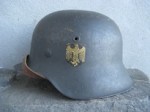
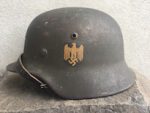
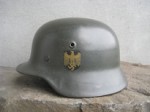
This example sports its original apple green semi-gloss finish, which remains approximately 85% intact. The tri-color shield remains an amazing 99% intact and the Army about 80%. The interior has an excellent brown leather liner that has just minor wear and discoloration from use. It is size stamped 56 and with it’s original drawstring and a reinforced aluminum liner band that is maker marked, dated 1938 and size stamped 58. The side of the interior is marked ET 64, indicating production by Eisenhuttenwerke in Thale in the size medium of 64. The rear of the skirt is stamped with the steel lot number of 3819, which indicates that the shell was produced some time in 1938. The chinstrap is all original and date stamped the year 1938. A very sound example of an all original and untouched early war army helmet.
$1200.00 SOLD


M40 NS66 SD Heer Helmet with Original Normandy Camo Split Pins

This fantastic find came directly from the son of a vet in the parking lot of last years MAX show. This M40 NS66 helmet has definitely seen some real fighting as the original wearer must of either been shot or wounded to such an extent that the original liner had to removed and replaced suggesting it was unfit for further combat use. As the Germans never threw anything away preferring to re-use and recycle literally everything it comes as no surprise that parts of a Normandy camo helmet such as these all original split pins would have been taken out of cracked or damaged shell and then re-used at the field depot level to make this particular helmet once again re-serviceable.

A beautiful nearly complete factory applied Pocher decal rates at an almost perfect 99%. The liner does not appear to be a new factory issued one and was probably taken from another well used helmet in the field as it already shows a lot of age and signs of battle fatigue. The chinstrap is all original in early war aluminum buckle and fully marked however the only numbers/letters I can make out is the year 1940. A real been there done that looking specimen of WW2!!!
$1,195.00


Late War M42 CKL66 SD Heer Army Helmet

This is a great example that retains approximately 95% of its dark feldgrau finish. The rough texture can still be felt along the lower skirt. The CKL Army decal has toned nicely and remains approximately 90% intact but unfortunately took a ding to the upper wing section at one point during the war.The interior has a light brown leather liner that is size stamped 58. It has a drawstring and remains near excellent with only minor wear and scuffing to the lower edge. The liner band is non-reinforced zinc. The side of the back rear skirt CKL66, indicating production by Eisenhuttenwerke in the city of Thale in a large size 66 centimeter circumference. A very sound example overall!
$749.00


Remarkable M40 Q62 Bigfoot SD Heer Helmet

New item description coming soon….


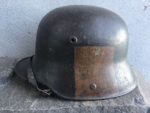
M18 ET64 SD Re-Issue Helmet

Another great find out of the rolling hills of Kentucky where a woman sold it me belonging to her late uncle’s estate a vet himself with no children had kept it since end of the war probably with great pride as  souvenir of his accomplishments.  Such a classic example of how a helmet winds up in the hands of those who least appreciate it only to end up once again into the hands of a collector like myself who will fully appreciate it’s significance in history.  This WWI helmet was  reissued with the exterior of the shell being a rough textured grey combat paint which rates 80%. They used the same rivets from a previous reissue, so those have a smooth textured green paint. The eagle decal is has no shellac and is close to a remarkable 99%.  The size 57 liner with zinc liner band has its original drawstring and shows only normal light wear with no tears or repairs. The liner itself is 100% pigskin as can be clearly seen by the same star like dimple marks once would see looking at an old football.  The interior of the helmet is still painted the WWI green color.  The chinstrap is mid war and marked although difficult to read.  One interesting aspect of the chinstrap is that instead of steel rivets it has pre-war brass helmet split pins used instead proving once again the German practice of reuse and recycling.


$900

Reissued Textured Finish M35 NS68 SD Heer Army Helmet

This is an all original extremely large M35 N68 sized helmet which was repainted at the field depot level and given a fresh coat of flat feld grau paint which has now faded somewhat over time. The decal remains in remarkable condition at about 98% which is something I always look for when buying as I am a bit of a decal nut in that I love complete decals and try to avoid less quality specimen’s even though they are offered to me in droves. Additional photos pending….
$995.00


Spectacular M42 NS62 SD Heer Army Helmet

This is by far the nicest example of a late war single decal army helmet I have ever come across.  It honestly appears as though it saw very little or not combat action as if created and then never having left the factory floor or quartermaster’s storage depot. As both the decal and original late war chinstrap are in gem mint condition. Due to shortages throughout the war the leather liner is actually one size too big and so there is an overlapping of one of the fingers which gives one a fascinating look into the desperation faced by late war Germany. The decal is absolutely breath taking and rates at a whopping 100%. They just don’t get any better than this one!!!
$1349.00


Reissued M35 ET62 SD Heer Army Helmet

Textbook example with 85% of its reissue smooth dark green combat paint intact. The Heer decal is in aged but in near perfect condition at 98% plus. This is a great example of how the Heer eagle can sometimes take on a golden tea toned appearance that leads a lot of amateur collectors to believe they have a Kreigsmarine. The size 55 liner has taken on a dark brown patina, and is very solid and complete with most of its original drawstring. The liner is a later war addition in zinc meaning the original reinforced aluminum liner band was replaced at some point at the depot level. The inside side of the shell is stamped ET62 with the rear skirt lot number 3028. The original chinstrap is the early war aluminum buckle type and stamped however too difficult to make out without a closer examination. A very sound and desirable example!!!
$850.00


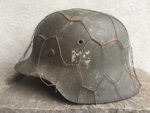
M42 NS64 Chicken Wire Camo Helmet


Original M42 CKL68 Bucket Sized ND Heer Army Helmet

The helmet is an all original German Heer M42 CKL 68 which is the largest issued size of the second world war and therefore highly sought after. The split pins are all original and never removed as there is actually spider webs and dust inside the liner band between the helmet shell and zinc band. The liner is factory stamped 61 which refers to the circumference in centimeters and is in remarkable good condition given it’s age. The paint is extremely dark green almost black and shows some dark rust coming through but no dents or pitting with some areas of gritty texture beneath the paint. I read that the M42′s weren’t given as thick a coating as the M35′s and M40′s and were never baked so the paint tends to be somewhat thinner and more prone to rusting than helmets made earlier. Still a great bucket sized no frills helmet.
$495.00


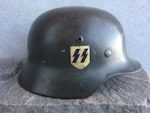
Early Model M35 DD NS64 SS Combat Police Helmet

The smooth textured apple green paint on this example is in a fairly dark hue, and is fully 99% intact. The left side of the helmet has the standard issue non-bordered Police decal, which is a solid 98% intact. Over on the right side, the party shield checks in at better than 98%. The interior rates at near perfect with a light brown leather stamped size 57 liner and includes the original drawstring. The reinforced aluminum liner band is maker marked and dated, 1938. The shell is stamped on the side of the interior NS64 by Vereinigte Deutsche Nikelwerke in Schwerte and lot stamped D163. This even includes an excellent black leather chinstrap with the original early war aluminum buckle date stamped Larsen Berlin 1938. A great early example of a fully complete and rare SS-combat police helmet!
$2450.00 SOLD


Intriguing G.I. Vet Art M35 Q64 Swastika Painted Helmet

This interesting find is a great example of the kinds of souvenirs the average US soldier was was picking up while still in theater at the very end of the war in 1945. The helmet is a Q64 M35 with it’s original never removed aluminum reinforced liner still in tact. Beneath the original black paint one can still find traces of the original smooth finish pea green paint with outlines of decals on both sides which although hidden may still be fully in tact. The back inside rim is also named by it’s original German wearer something that resembles “Maiher”. Based on the age of the black paint and the amount of scuffs and minor scraps it definitely appears to be either a flak helmet applied by the original German soldier which then had later added GI swastika vet art applied or quite possibly based on the age and oxidation of the white swastika paint a field police unit which was hastily assembled near the end of the war with these rough symbols painted on by the German solider himself. It is difficult to nail down because it is nearly impossible to tell the difference between paint applied by a German solider in 1944 verses a GI at the end of 1945. Still a very interesting conversation piece worthy of additional research. If one is able to find some original photos of any German field police units shown wearing helmets with crude swastika painted on them than I think you would have a very interesting piece of history here.
$450.00


Rare Untouched M35 ET66 Facist Franco Spanish Civil War German Export Helmet

Here is an extremely rare example of an M35 German manufactured helmet with original liner and pea green smooth finish paint which has been exported for use in the 1936 Spanish civil war. Fascinatingly enough one can still see traces of the original double decals beneath the brown olive colored paint applied by the Fascist Spanish Army. They also added a bracket on the front to attach the Franco eagle crest which in itself is rare to find one still affixed to the front. Most of the Spanish helmets I’ve seen either do not have the Franco eagle or have a Spanish style inner liner but this one is early war and all German. Common for Spanish export at this time was ET and mainly in size 66 so this one definitely fits the bill in every respect.
$850.00


Uncut Sheet of Four Ed Strache Heer Decals

Description coming soon…


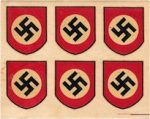
Rare Uncut Sheet of Two M35 National Shield Decals


Original Unapplied Ed Strache Warnsdorf Heer Decals

3 Foil backed and all original factory decal.
Priced According to Condition From Left to Right
1)$90
2)$100
3)$80


Army insignia
The first detailed description of Army insignia appeared in an order issued by the Reichswehr Minister on 5 April 1934. At this time the helmets in service included various World War I models; the M1935 was still in the prototype stage and had not yet been issued. The order requested that all military supply centres distribute the new Army insignia and coloured national shield decals. The tricolour shield introduced nearly 12 months earlier was to be removed in favour of the new decals. The cost for a single set of decals was estimated at 1.3 Reichpfennig. The national shield was moved to the right side of the helmet, and the Army’s new eagle insignia replaced it on the left side. During this transition it was not uncommon for helmets to have misaligned or poorly placed insignia, since they were applied at unit level by individual soldiers or by the staff of Army clothing offices, who often failed to interpret the orders properly. The service insignia of the Heer took the form of a silver coloured eagle with down folded wings, its talons clutching a swastika, on a black shield-shaped ground. Although intended primarily for the Army, variations of this emblem could be found in a variety of symbolic uses throughout the Third Reich. Several makers were contracted to produce the decals, which accounts for slight variations in the design of the eagle. The Army service emblem was placed on helmets until discontinued on 28 August 1943. The tricolour national decal was applied until 21 March 1940 (preceding the invasion of France on 10 May). The Army High Command directive of 21 March ordered that all such decals be removed from helmets, particular emphasis being placed on helmets designated for field or combat use. Despite the directive, many helmets in fact retained both insignia, particularly those used in rear areas and those in the possession of officers and high-ranking officials.

Decal manufacture and application
Prior to 1934 Reichswehr helmet insignia were typically hand-painted. For the sake of uniformity, the clothing office within a unit often painted the insignia. Nevertheless, the application of emblems hand painted by individuals naturally resulted in a wide range of variations dependent on artistic skill. Following the introduction of the new national shield in March 1933 there was a brief attempt at using a pressed metal shield on M1933 helmets, and in addition some decal transfers were printed in the three colour design; but before April 1934 neither type of emblem was used extensively, and hand-painted shields were still the norm. With the coming of the Third Reich, various firms with expertise in print media and lithography were contracted by the Reich’s Ministry to produce helmet insignia in the form of high quality decal transfers.  Specifications called for printing in fade-resistant colours using flax oil varnish. Army decals utilized a layer of aluminium foil to create a metallic appearance like that found on uniform insignia. Decal dimensions were consistent from one firm to the next, with little variation in the final design.
Decal transfers were printed in both lacquer-based and water-slide formats. Lacquer based decals were printed face down on a thin layer of transfer paper with the metallic side exposed. Application required painting the underside with a thin layer of Ducolux, Kopal, or Damar lacquer prior to placement on the helmet. Once the decal was bonded to the helmet a thin laver of varnish or lacquer was brushed onto the surface to increase durability – although in practice many decals never received this final protective coat. Difficulties experienced with the lacquer-based transfers were no doubt the reason for a change to water-slide decals. These differed from lacquer based transfers in being printed face up on a specially treated paper; between the decal and the transfer sheet was a thin layer of glue. The decals were dipped in water to soften the glue, and then slid onto the surface of the helmet. Once the lacquer or glue had bonded, decals of both formats were permanent and often difficult to remove, even standard of manufacture, with hard pressure or by scraping. The fact that original specimens still retain their bright metallic appearance is testimony to their high standard of manufacture.

Placement of helmet insignia
The national tricolour shield introduced in March 1933 remained on the left side of the helmet until 17 February 1934. On this date it was moved to the right side of the helmet to accommodate the newly introduced service insignia of the Army and Navy on the left. Units participating in the newly instituted ‘Hero’s Memorial Day’ and related parades held in Berlin were required to display the new insignia. Instructions required that decals be placed no less than 3.3cm below the ventilation lug of the helmet. It is important to note that up until this time all helmet insignia were applied at unit level; following the introduction of the M1935 helmet, factories began to apply decals as part of the finishing process, as the earlier model helmets were slowly phased out of service.

DECAL MANUFACTURER’S AND LOCATIONS

C.A. Pocher – Nurnberg
Ed. Strache – Warnsdorf
Huber Jordan – Nurnburg
Methner U Berger – Berlin

Heer Army insignia
The first detailed description of Army insignia appeared in an order issued by the Reichswehr Minister on 5 April 1934. At this time the helmets in service included various World War I models; the M1935 was still in the prototype stage and had not yet been issued. The order requested that all military supply centres distribute the new Army insignia and coloured national shield decals. The tricolour shield introduced nearly 12 months earlier was to be removed in favour of the new decals. The cost for a single set of decals was estimated at 1.3 Reichpfennig. The national shield was moved to the right side of the helmet, and the Army’s new eagle insignia replaced it on the left side. During this transition it was not uncommon for helmets to have misaligned or poorly placed insignia, since they were applied at unit level by individual soldiers or by the staff of Army clothing offices, who often failed to interpret the orders properly. The service insignia of the Heer took the form of a silver coloured eagle with down folded wings, its talons clutching a swastika, on a black shield-shaped ground. Although intended primarily for the Army, variations of this emblem could be found in a variety of symbolic uses throughout the Third Reich. Several makers were contracted to produce the decals, which accounts for slight variations in the design of the eagle. The Army service emblem was placed on helmets until discontinued on 28 August 1943. The tricolour national decal was applied until 21 March 1940 (preceding the invasion of France on 10 May). The Army High Command directive of 21 March ordered that all such decals be removed from helmets, particular emphasis being placed on helmets designated for field or combat use. Despite the directive, many helmets in fact retained both insignia, particularly those used in rear areas and those in the possession of officers and high-ranking officials.

3 Portrait Helmet Field Postcards


2 Responses to ORIGINAL HELMETS FOR SALE

  1. Pingback: Buy Targeted Fans

  2. Pingback: Facebook Fans